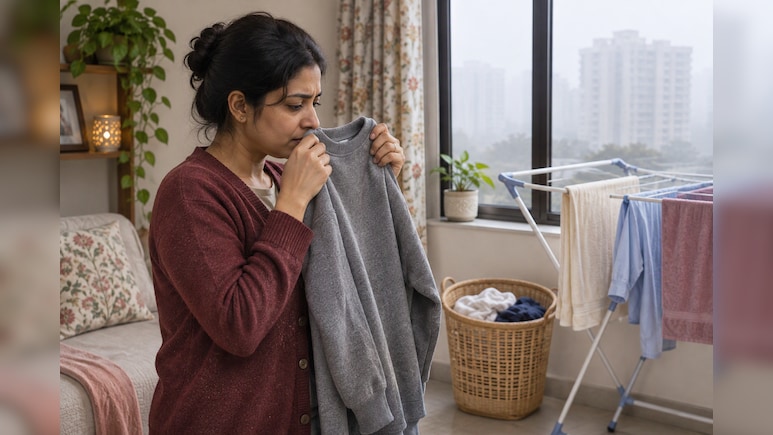
You've just finished a load of laundry. The clothes smell clean when they come out of the washing machine, so you hang them on a drying rack near the balcony and forget about them. The next morning, they're still slightly damp, but by evening, they finally seem dry enough to fold. But when you put on that sweatshirt a day later, something feels off. It doesn't smell dirty exactly, but it certainly doesn't smell fresh either. If you've experienced this during winter, then it's one of those household annoyances that quietly returns every year, right alongside foggy mornings, cold floors and the never-ending hunt for a sunny patch on the balcony.
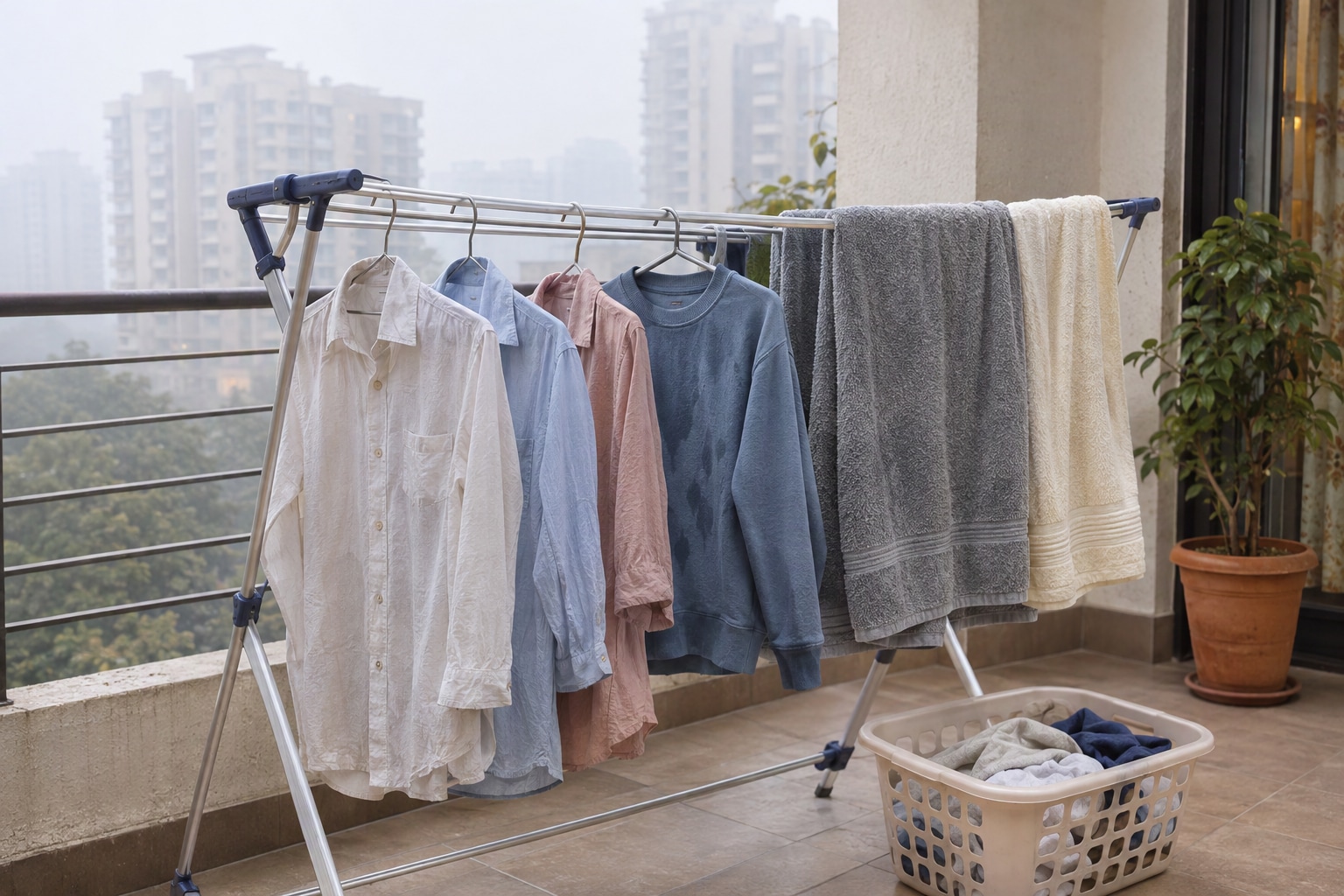
Freshly washed clothes drying indoors on a winter day can take longer to dry completely, increasing the chances of trapped moisture and lingering musty odours.Photo Credit: Ai-generated
In cities like Delhi, Noida, Gurgaon and Chandigarh, winter laundry can feel particularly frustrating. Also, between shorter days, weak sunlight, indoor drying and the occasional spell of dense fog, clothes often take much longer to dry than they do during summer and that's where the trouble starts.
The Balcony That Turns Into A Laundry Waiting Room
During summer, clothes seem to dry almost effortlessly, but a few hours on the clothesline and they're ready to wear. On the other hand, winter has other plans, the same bedsheet that dries in an afternoon in May might take an entire day, sometimes more, in December. Hoodies, jeans and bath towels can hang untouched for so long that they start to become permanent residents of the drying rack.
Many households respond by bringing laundry indoors. You'll see shirts hanging behind doors, towels draped over chairs and sweaters spread across spare beds. While it saves them from dust and fog, it also slows down drying because the air inside most homes doesn't circulate particularly well as it should for drying clothes. The result? Moisture gets trapped for longer than it should.
Also Read: The Winter Dust Problem, Solved: Simple Changes That Can Make Your Home Feel Cleaner
When Clothes Feel Dry But Actually Aren't
This is where most people, including me, get fooled. When you touch a hoodie that's been hanging for 12 hours and it may feel perfectly dry on the surface, you fold it, put it away and move on. But thicker fabrics don't always tell the truth because the outer layer may have dried, while the inner layers still holds the moisture. It's very common with sweatshirts, blankets, denim and winter pyjamas.
A day or two later, a faint damp smell begins to appear on the clothes and it is normal to blame the detergent at this stage. Some people also blame their washing machine and think that it needs cleaning, which is also true as sometimes those things contribute, but very often the real culprit is simply incomplete drying.
The Towel Experiment Most Of Us Accidentally Conduct Every Winter
If you want proof, then look at your towels, they are usually the first items to develop that stubborn musty smell which you don't like. A freshly washed towel can seem fine immediately after drying, but after a shower, once it absorbs a little moisture again, the odour suddenly becomes obvious. That's because towels are excellent at holding water and during winter they often take much longer to dry than we think. So, if your towels smell unpleasant despite regular washing then your laundry routine isn't necessarily failing, your drying process probably is.
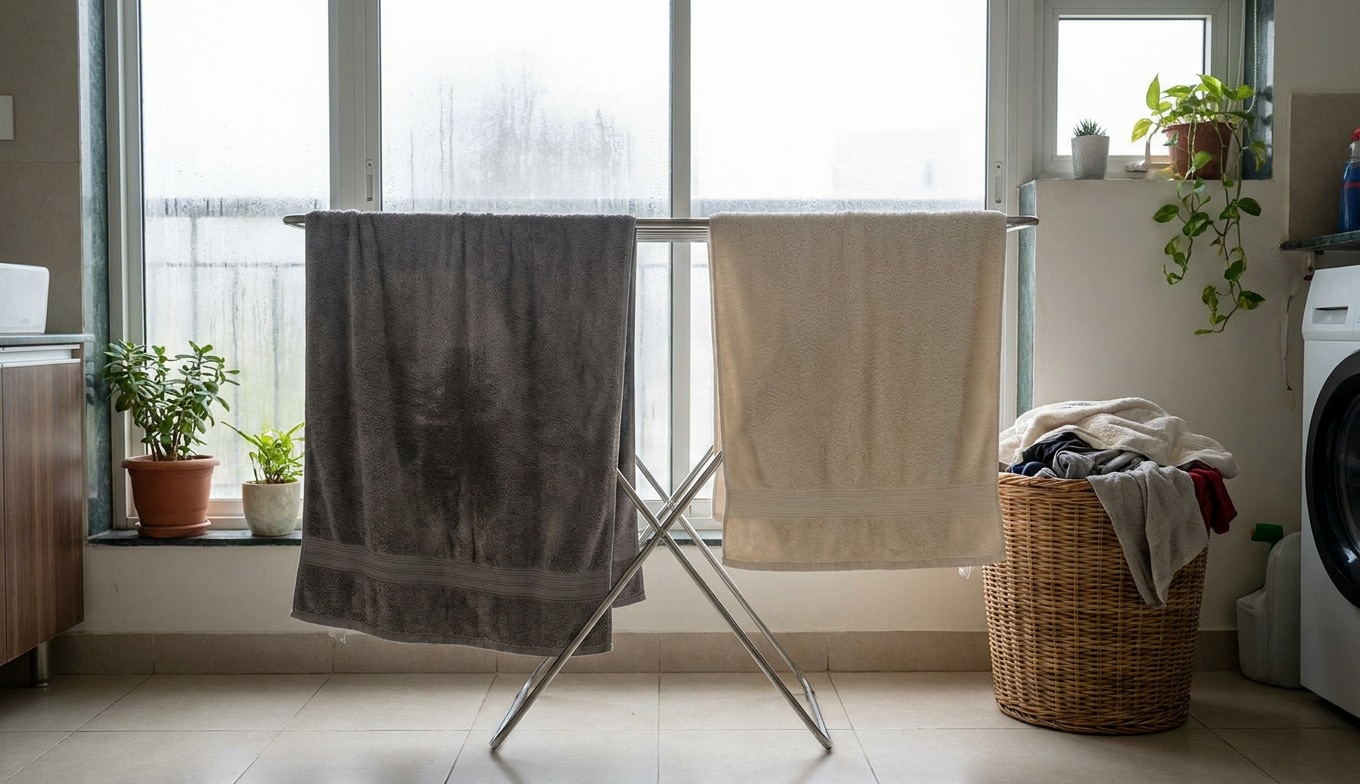
Thick towels retain more moisture than most garments, which is why they're often the first items to develop a damp, musty smell during winter.
Photo Credit: Ai-generated
The Washing Machine Isn't Always Innocent Either
Of course, sometimes the machine deserves some blame because many front-load washing machines spend winter sitting closed between wash cycles which causes a little amount of moisture left inside the drum that creates an ideal environment for mildew and bacteria to develop. These signs are usually easy to spot when you feel a sour smell when you open the door or black marks around the rubber seal even the detergent drawer that never seems completely dry or the clothes that smell less fresh than they should
It's surprisingly a common problem, especially in homes where laundry is done every few days rather than daily. So, a simple habit helps enormously: leave the machine door slightly open after each wash. It may sound almost too simple to matter, but it allows trapped moisture to escape instead of building up inside the drum.
Three Small Changes That Made My Laundry Dry Faster
Over the years, I have realised that the biggest improvements often come from the simplest adjustments. The first thing I did was giving clothes more space and second thing was not to squeeze an entire washload onto one drying rack, this might feel efficient, but it dramatically slows airflow. The third thing was using an extra spin cycle for bulky items like towels, jeans and bedding etc. You will be surprised to see how much additional water comes out.
Also Read: Fabrics To Wear During North Indian Winters: Stay Warm, Comfortable And Stylish
Why Some Homes Struggle More Than Others
Have you ever noticed that friends living in the same city seem to have completely different laundry experiences? I did, and I also figured out that this part of it comes down to ventilation. You can notice that some homes with enclosed balconies, limited sunlight or tightly sealed windows tend to hold onto humidity for longer. Every shower, pressure-cooker whistle and batch of drying clothes adds more moisture to the air in a closed house. Eventually, that moisture has nowhere to go, that's when laundry starts behaving as though it's permanently damp, regardless of how long it has been hanging.
A Few Helpful Products If You're Tired Of Rewashing Clothes
If this is a recurring battle every winter, a few purchases can make life easier.
1. Moisture absorbers for wardrobes and storage spaces
2. Compact dehumidifiers for laundry areas
3. Heated drying racks for apartments with limited sunlight
4. Laundry sanitiser liquids for towels and bedding
5. Laundry organisers that improve airflow during drying
You don't need all of them. Even one well-chosen solution can help if drying clothes becomes a seasonal headache.
Before You Start Another Wash Cycle Today
So the next time a freshly washed sweatshirt smells a little musty, don't automatically blame the detergent, just take a closer look at where and how the clothes are drying. Because now you know that the winter laundry is often less about washing and more about moisture management. A little extra airflow, a bit more patience and a few smarter drying habits can make the difference between clothes that merely look clean and clothes that actually smell fresh. Because after spending an entire weekend catching up on laundry, nobody wants to do it all over again. Am I right?
Frequently Asked Questions (FAQs)
Q1. Why do clothes smell musty even after washing?
In most cases, the issue isn't the washing process but the drying process. During winter, clothes take longer to dry, allowing moisture to linger in the fabric and create conditions for odour-causing bacteria.
Q2. How can I make clothes dry faster in winter?
Use a higher spin cycle, avoid overcrowding drying racks, and place laundry in a well-ventilated area. Good airflow often helps more than simply keeping clothes in a warm room.
Q3. Is it okay to dry clothes indoors during winter?
Yes, but ensure there's adequate ventilation. Opening windows for a while, running a ceiling fan or using a dehumidifier can help prevent moisture from building up indoors.
Q4. Why do towels develop a damp smell more quickly than clothes?
Towels are designed to absorb and hold large amounts of water. In winter, they often take much longer to dry completely, making them more likely to develop musty odours.
Q5. Can a washing machine cause clothes to smell bad?
Yes. If the drum, rubber seal or detergent drawer isn't cleaned regularly, mould and bacteria can build up inside the machine and transfer unpleasant smells to freshly washed laundry.
Disclaimer: This article may include references to or features of products and services made available through affiliate marketing campaigns. NDTV Convergence Limited (“NDTV”) strives to maintain editorial independence while participating in such campaigns. NDTV does not assume responsibility for the performance or claims of any featured products or services.
