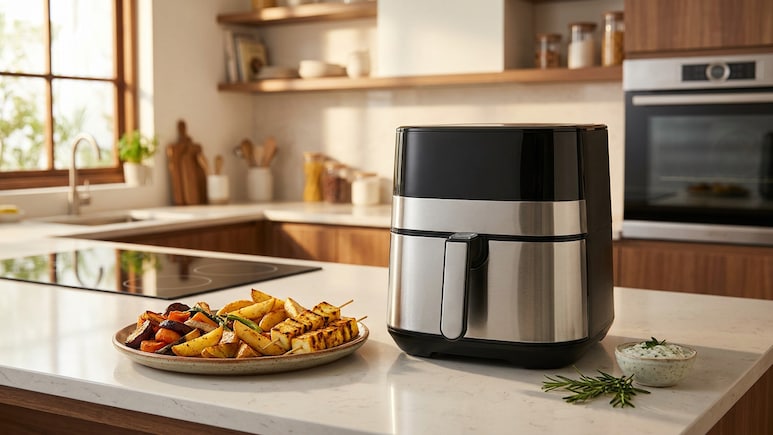
Air fryers have rapidly evolved from trendy kitchen gadgets into mainstream household appliances. Promising faster cooking, less oil usage and greater convenience, they have become a popular choice among consumers looking to prepare everything from snacks and frozen foods to full meals. As electricity costs remain a concern for many households, a common question has emerged alongside their growing popularity: do air fryers actually use less electricity than conventional ovens? The answer is often yes, but the extent of the savings depends on factors such as cooking habits, appliance size and the type of food being prepared. For consumers evaluating whether an air fryer is worth adding to their kitchen, understanding its energy efficiency can be just as important as its cooking performance.
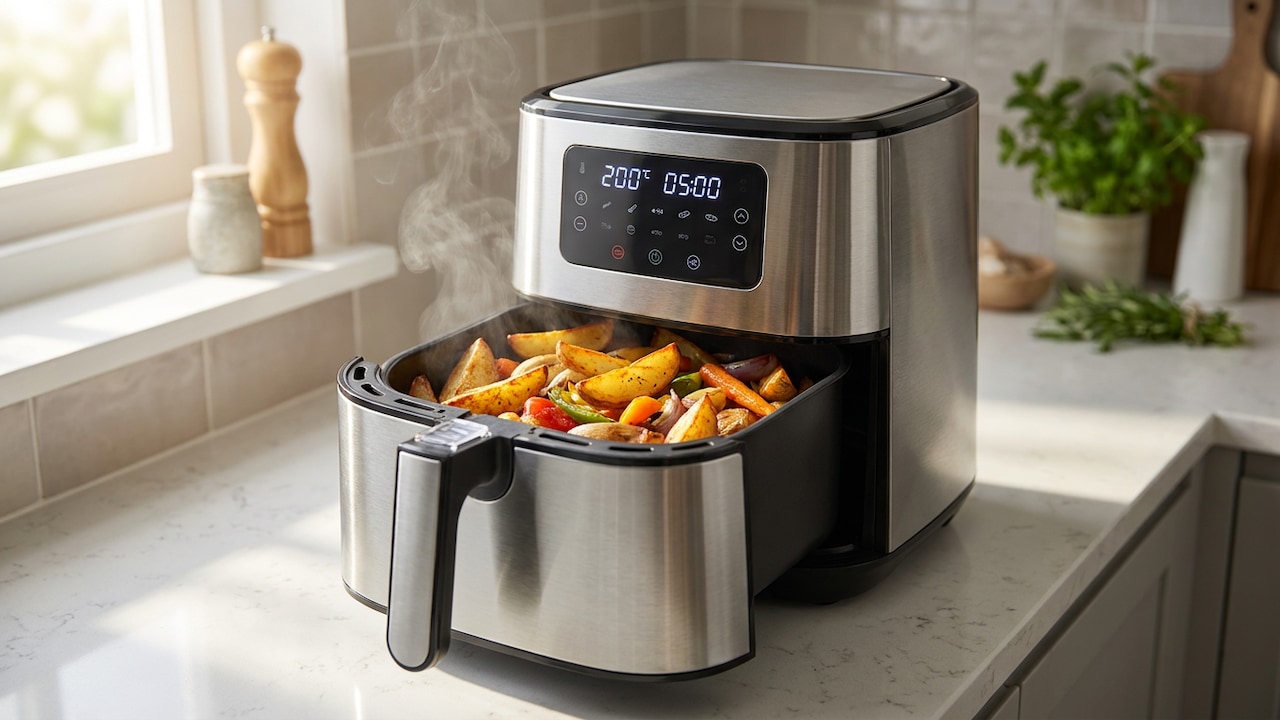
Air fryers cook food using rapidly circulating hot air, helping reduce cooking time and energy consumption for many everyday meals.
Photo Credit: Ai generated
Why Appliance Efficiency Matters
Kitchen appliances can have a meaningful impact on household electricity consumption, particularly in homes where cooking happens multiple times a day. While air conditioners and refrigerators often receive the most attention when discussing energy bills, cooking appliances can also influence monthly costs, especially when used frequently. As energy-conscious consumers increasingly examine the total cost of ownership of household appliances, efficiency has become a key purchasing consideration. The question is no longer just whether an appliance cooks well, but whether it can deliver the same results while using less energy.
How Air Fryers Work
Despite the name, air fryers do not actually fry food. Instead, they use a heating element and a powerful fan to circulate hot air around food at high speed. This rapid air circulation creates a crisp exterior similar to frying while using little or no oil. More importantly, from an efficiency standpoint, air fryers operate within a relatively compact cooking chamber.
Because there is less space to heat, the appliance can often reach cooking temperatures more quickly than a conventional oven. In many cases, minimal preheating is required, which further reduces energy consumption and shortens meal preparation times.
Also Read: Can A Rice Dispenser Help Reduce Food Waste? Here's What Buyers Should Know
How Conventional Ovens Differ
Conventional ovens are designed for versatility and capacity. Whether baking cakes, roasting vegetables or preparing family-sized meals, they can accommodate significantly larger quantities of food. However, that larger capacity comes with a trade-off. Ovens must heat a much bigger cooking chamber before food begins cooking. Even when preparing a relatively small portion, the appliance still expends energy heating the entire interior space. For households that regularly cook large meals, this may not be a concern. But for everyday tasks such as reheating leftovers or cooking a snack, it can be less efficient.
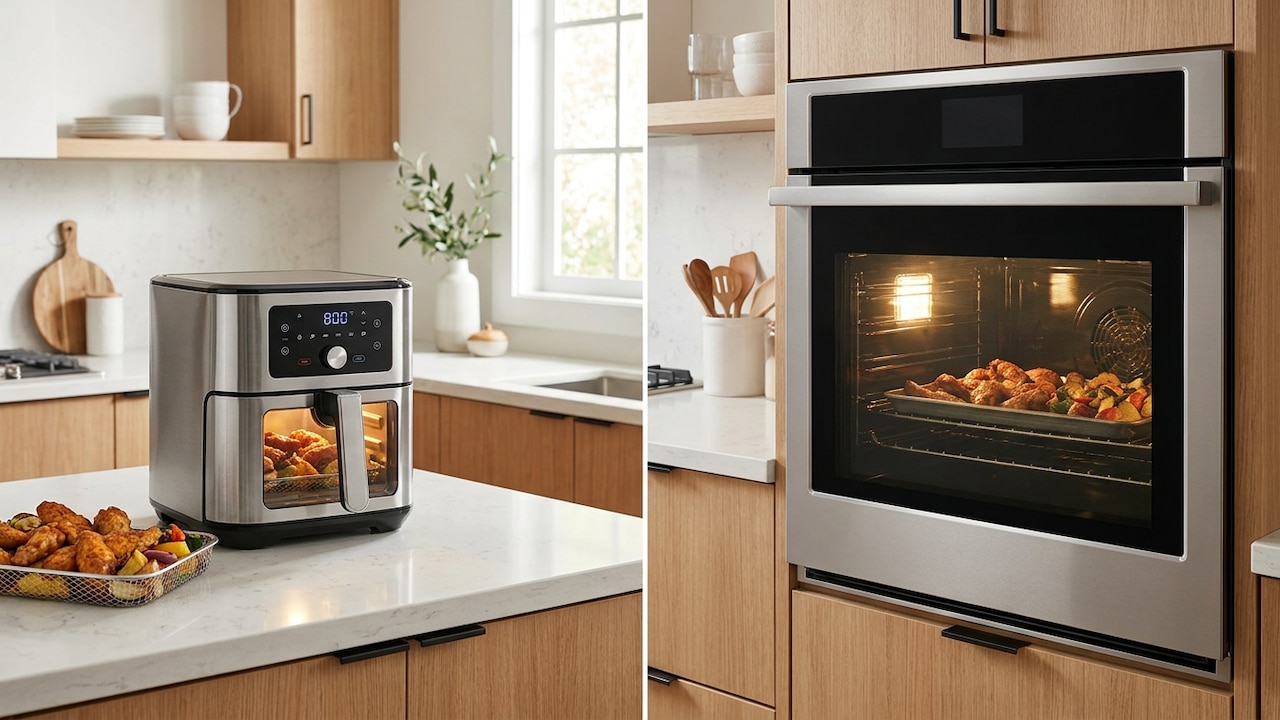
Air fryers and conventional ovens serve similar cooking purposes, but their energy use can vary depending on meal size and cooking habits.
Photo Credit: Ai generated
Where Air Fryers Deliver The Biggest Savings
The biggest advantage of an air fryer is not necessarily its wattage rating. The real benefit comes from combining a smaller cooking chamber with shorter cooking times.
Everyday Meals And Quick Cooking
Imagine preparing a portion of roasted vegetables, a batch of frozen snacks or leftovers from the previous night's dinner. A conventional oven may require several minutes to preheat before cooking begins. An air fryer, by contrast, often reaches the desired temperature much faster. Because heat circulates within a smaller space, food can cook more quickly, reducing the overall amount of electricity used. For households that use cooking appliances daily, these small savings can add up over weeks and months.
Cooking For Smaller Households
Air fryers are particularly well suited to individuals, couples and small families. When preparing food for one to four people, heating an entire oven can sometimes be inefficient. Much of the energy goes towards warming unused space inside the appliance. An air fryer concentrates heat where it is needed, making it an attractive option for smaller portions. Urban households, where kitchen space is often limited and meal sizes tend to be smaller, may find this especially beneficial.
A Practical Example
Consider a family preparing frozen snacks for an evening tea-time gathering. Using a conventional oven typically involves preheating the appliance, waiting for the cooking chamber to reach temperature and then completing the cooking cycle. An air fryer can often accomplish the same task more quickly because hot air circulates in a smaller area.
The exact electricity savings will vary depending on the appliances involved, but the underlying principle remains straightforward: less space to heat generally means less energy consumption.
When Ovens Can Be More Practical
Efficiency does not always mean better value in every situation. For a large family meal, an oven's larger cooking capacity can become an advantage. If a household needs to prepare multiple dishes or cook for six to eight people, an air fryer may require several batches.
Running multiple cycles can reduce or even eliminate some of the energy-saving benefits associated with air fryers. In such cases, a conventional oven may be the more practical and time-efficient option. This highlights an important point for consumers: the most efficient appliance often depends on how it is used.
What About Baking?
Many modern air fryers include baking functions, but conventional ovens still offer greater flexibility for serious bakers. Larger cakes, breads, cookies and elaborate baked dishes typically require more space and more precise temperature control than many compact air fryers can provide. Households that bake frequently may continue to find an oven indispensable despite its higher energy requirements. For occasional baking, however, an air fryer may be capable of handling many smaller tasks while consuming less electricity.
Also Read: Energy-Efficient Appliances That Can Help Reduce Your Electricity Bill
Looking Beyond Electricity Bills
Energy savings are important, but they are only part of the value proposition. Many consumers choose air fryers because they offer a combination of practical benefits that align well with modern lifestyles.
These include:
- Faster cooking times
- Reduced oil usage
- Less heat generation in the kitchen
- Easier cleaning compared with large ovens
- Compact designs suitable for smaller homes
- Pre-set cooking programmes for convenience
For busy households, these advantages can be just as compelling as lower power consumption.
What Buyers Should Look For
If energy efficiency is a priority, buyers should consider more than just the purchase price.
Capacity: Choose a model that matches household size. Buying an excessively large air fryer may reduce some efficiency benefits.
Power Consumption: Higher-wattage models can cook faster, but comparing cooking performance alongside power usage provides a more accurate picture of efficiency.
Cooking Functions: Models that combine air frying, roasting, reheating and baking can offer better value and reduce the need for multiple appliances.
Ease Of Cleaning: Non-stick baskets, dishwasher-safe components and removable trays can make day-to-day use more convenient.
Build Quality: A durable appliance is more likely to deliver long-term value than a cheaper model that requires replacement after a short period.
So, Can An Air Fryer Help Lower Electricity Bills?
For many households, the answer is yes. Air fryers generally use less energy when preparing small and medium-sized meals because they heat up faster, cook more quickly and do not need to warm a large cooking chamber. While the savings from a single cooking session may be modest, regular use can contribute to lower electricity consumption over time. That said, consumers should match the appliance to their cooking habits rather than assuming an air fryer is always the most economical choice.
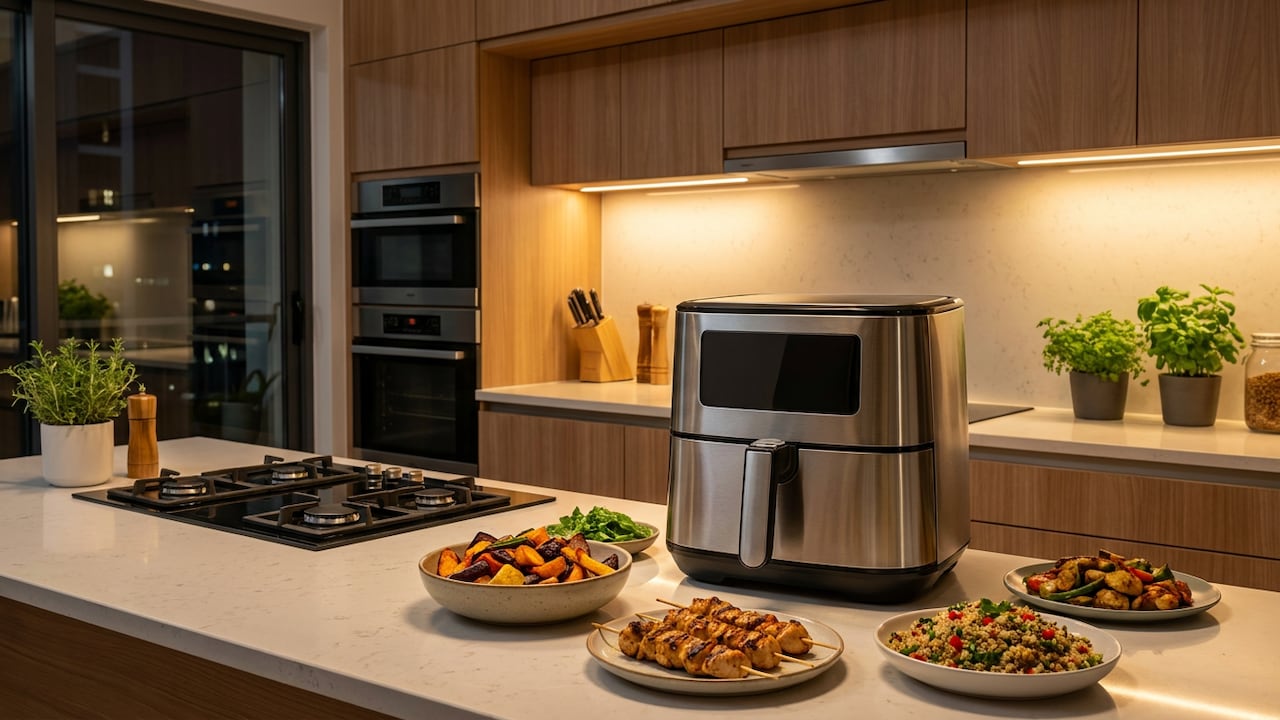
For many households, air fryers offer a combination of convenience, faster cooking and potentially lower energy consumption.
Photo Credit: Ai generated
In Conclusion
Air fryers are more than just a healthier alternative to deep frying. Their compact design and shorter cooking times can make them a more energy-efficient choice for many everyday cooking tasks. For smaller households and consumers who frequently prepare quick meals, they may offer both convenience and lower running costs.
Conventional ovens still retain advantages when it comes to capacity, batch cooking and baking. The best choice ultimately depends on how a household cooks. For many consumers, however, an air fryer can be a practical addition that delivers savings not just in cooking time but potentially on electricity bills as well.
Products Related To This Article
1. Ninja Air Fryer MAX PRO, 6.2L Air Fryer Oven 2-Year Warranty, Oil-Free Cooking, Max Crisp Technology, Variable Air Flow, Chemical Free Cooking Surface, 6-in-1 Air Fry, Roast, Bake & Reheat, Black
2. EDT Luma PureGlass™ 4.5L + 2.5L Dual Bowl Air Fryer Oven | ZERO COATING,100% Toxin Free, No Ceramic, PFAS, PTFE, PFOA | 6-in-1 Multi Function | 1500W | NutriRetain™
3. COSORI Air Fryer 5 QT (4.7 Litre) Black, 1500W Fast Cooking 9 Preset Menu, 30 Recipes Cookbook, Grill, Broil, Roast, Toast, Bake, Reheat, Defrost, Digital Touch Panel (CAF-L501)
4. PHILIPS Air Fryer NA120/00, 4.2 Litre, Large, 100% Food Safe
5. Pigeon Healthifry Digital Air Fryer, 360° High Speed Air Circulation Technology 1200 W with Non-Stick 4.2 L Basket
6. Milton Rapid Digital Air Fryer 4.2L | 1450W | 360° High Speed Air Circulation | Up to 90% Less Oil Usage | 8 Preset Menus | Touch Control Panel & Digital Display | Auto Shut-Off | 1 Year Warranty
7. COSORI Air Fryer 5 QT (4.7 Litre) Black, 1500W Fast Cooking 9 Preset Menu, 30 Recipes Cookbook, Grill, Broil, Roast, Toast, Bake, Reheat, Defrost, Digital Touch Panel (CAF-L501)
8. Nutricook 5L Air Fryer Slim with 100% Toxin-Free Ceramic Coating—No PTFE, PFAS, PFOA or Microplastics, Clear Window, Light & Large Basket | 1500W, 4 Presets, 2-Year Warranty
9. Ninja Air Fryer MAX PRO, 6.2L Air Fryer Oven 2-Year Warranty, Oil-Free Cooking, Max Crisp Technology, Variable Air Flow, Chemical Free Cooking Surface, 6-in-1 Air Fry, Roast, Bake & Reheat, Black
10. Faber 20 liter 1500 Watts Air Fryer Oven|Fry, Bake, Roast, Toast, Defrost, Grill, Reheat & Broil|85% Less Oil|Temperature & Timer Control, Preset Cooking Options, Convection Function, Auto-Off|(Black)
Frequently Asked Questions (FAQs)
Q1. Do air fryers consume less electricity than ovens?
In many cases, yes. Air fryers typically heat up faster and cook food more quickly than conventional ovens.
Q2. Can an air fryer replace an oven completely?
Not always. Ovens remain better suited for large meals, batch cooking and extensive baking.
Q3. Does a larger air fryer use more electricity?
Generally, larger models have higher power ratings, though actual consumption depends on cooking duration and usage patterns.
Q4. Are air fryers cheaper to run daily?
For small and medium-sized meals, air fryers are often more economical than using a full-sized oven.
Q5. What foods are best suited for air fryers?
Frozen snacks, vegetables, chicken, reheated foods and many everyday meals work particularly well in air fryers.
Disclaimer: This article may include references to or features of products and services made available through affiliate marketing campaigns. NDTV Convergence Limited (“NDTV”) strives to maintain editorial independence while participating in such campaigns. NDTV does not assume responsibility for the performance or claims of any featured products or services.
