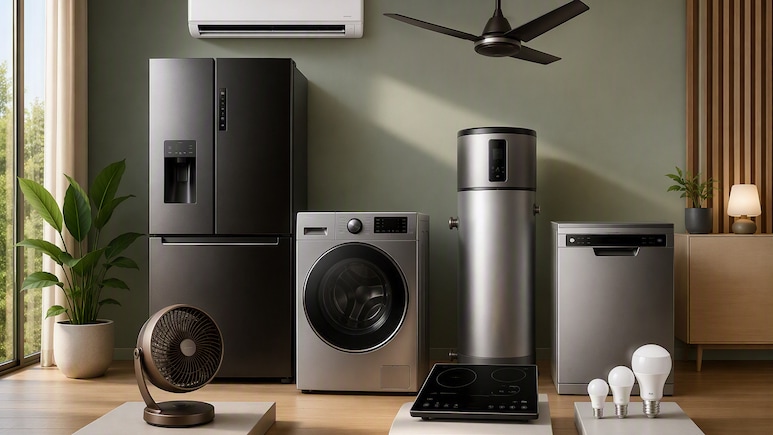
Electricity bills have become a growing household expense, especially as Indian homes increasingly rely on air conditioners, refrigerators, washing machines, water heaters, and a range of connected devices. While many consumers focus on reducing usage, experts often point out that the bigger savings opportunity lies in using appliances that are designed to consume less power in the first place. An energy-efficient appliance may cost more upfront, but lower electricity consumption can help offset the higher purchase price over time. For households planning upgrades this festive season or replacing ageing appliances, choosing products with better efficiency ratings can be a financially smarter decision than simply opting for the lowest-priced model.
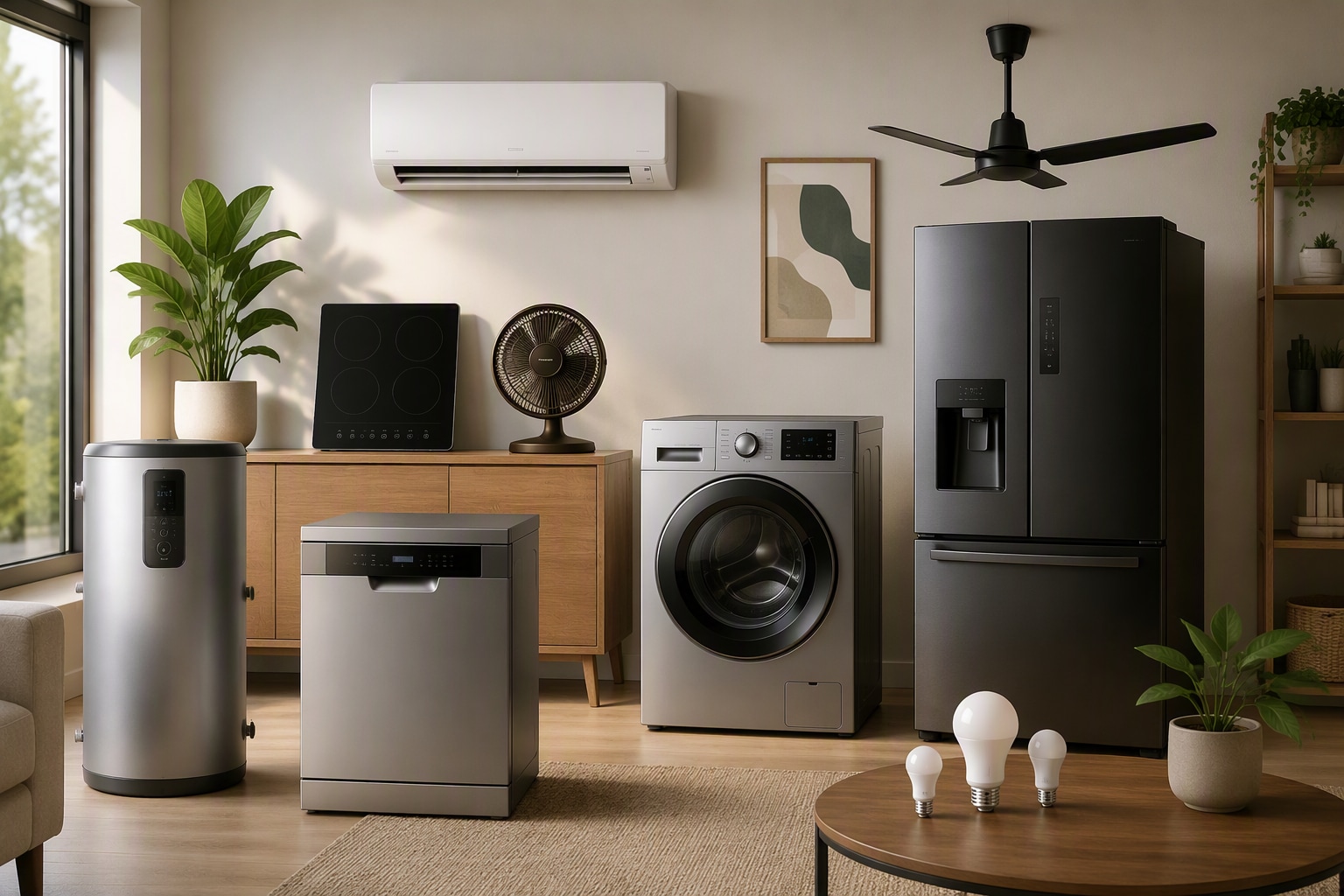
Upgrading to energy-efficient appliances can help households reduce electricity consumption and lower long-term utility costs.
Photo Credit: Ai-generated
Here are some of the appliances that can help reduce power consumption while potentially lowering monthly electricity bills over the long term.
Inverter Air Conditioners: High Initial Cost, Significant Long-Term Savings
Air conditioners account for a substantial share of household electricity consumption, particularly during peak summer months. Traditional fixed-speed ACs operate at full capacity and repeatedly switch on and off to maintain temperature, a process that consumes more energy.
Inverter ACs work differently. They adjust compressor speed according to cooling demand, helping maintain a consistent temperature while using electricity more efficiently. For households that use air conditioning regularly, the difference in power consumption can become noticeable over the course of a year.
When comparing models, experts generally recommend prioritising higher energy ratings, inverter technology, and features such as eco mode or programmable timers instead of focusing solely on the purchase price.
Also Read: Small Appliance, Big Comfort For Everyday Cooking: Best Rice Cooker For Your Kitchen
Refrigerators: The Appliance That Never Stops Running
Unlike most household appliances, refrigerators operate around the clock, making efficiency particularly important.
Modern refrigerators equipped with inverter compressors can automatically regulate cooling requirements based on usage patterns and internal temperatures. This helps reduce unnecessary energy consumption without compromising food preservation.
For consumers, buying the correct size is equally critical. An oversized refrigerator may result in avoidable electricity costs, while an undersized unit may struggle to operate efficiently when consistently overloaded.
BLDC Ceiling Fans: Small Upgrade, Bigger Impact Than Many Realise
Ceiling fans are among the most frequently used electrical appliances in Indian households. Yet many consumers continue using decades-old technology.
BLDC (Brushless Direct Current) fans consume significantly less power than conventional induction-motor fans. The difference may appear minor on a daily basis, but since fans often operate for several hours every day, savings can accumulate meaningfully over the appliance's lifespan. For consumers looking for a relatively affordable energy-efficiency upgrade, BLDC fans often offer one of the quickest payback periods.
Front-Load Washing Machines: Lower Water And Power Consumption
While top-load washing machines remain popular because of lower upfront costs, front-load models are generally more efficient when it comes to both water and energy use. Most modern front-load machines use sensors to determine load size and automatically adjust water and electricity consumption accordingly. Many also include dedicated eco programmes designed to minimise power usage without affecting cleaning performance. For larger households that run multiple wash cycles every week, the long-term savings can justify the higher initial investment.
Induction Cooktops: Faster Cooking, Less Energy Waste
Cooking appliances can also influence household electricity usage. Induction cooktops transfer energy directly to cookware rather than heating the surrounding surface. This significantly reduces energy loss and often reduces cooking times compared to conventional electric cooking methods. For consumers who rely heavily on electric cooking, improved efficiency can contribute to lower energy costs while offering better temperature control and convenience.
Heat Pump Water Heaters: An Option For Long-Term Value Seekers
Water heating is another major contributor to residential electricity consumption. Traditional electric geysers generate heat directly using electrical resistance, whereas heat pump water heaters extract heat from surrounding air and transfer it to water. This process uses considerably less electricity. Although heat pump systems typically involve a higher upfront cost, they can be attractive for households focused on long-term savings and lower operating expenses.
LED Lighting: The Simplest Efficiency Upgrade
Not every energy-saving solution requires a major investment. Replacing conventional bulbs with LEDs remains one of the easiest and most affordable ways to reduce household electricity consumption. LEDs use substantially less power, generate less heat, and generally last much longer than older lighting technologies. For households that have not yet completed the switch, LED adoption continues to offer a straightforward opportunity to reduce energy costs.
What Buyers Should Evaluate Before Purchase
An energy-efficient appliance is not automatically the most economical choice. Consumers should assess:
- Upfront purchase cost versus expected lifetime savings
- Energy rating and annual electricity consumption
- Frequency of use
- Maintenance requirements
- Appliance size relative to household needs
- Availability of smart energy-saving modes
In many cases, a slightly more expensive appliance can prove cheaper over its lifespan due to lower operating costs.
Bottom Line
Energy-efficient appliances should be viewed not merely as household upgrades but as long-term financial decisions. Whether it is an inverter air conditioner, a BLDC fan, a front-load washing machine, or an efficient refrigerator, the right purchase can help reduce electricity consumption month after month.
Also Read: Small Screen, Big Experience With Today's Smart Televisions: Best 32-Inch LED TVs
For buyers interested in managing rising utility costs, the key is to focus on the total cost of ownership rather than sticker price alone. The most affordable appliance at checkout is not always the cheapest appliance to own over time. That is where energy efficiency can translate into measurable savings and better value.
Frequently Asked Questions (FAQs)
Q1. Which appliance consumes the most electricity at home?
Air conditioners are typically among the highest electricity-consuming appliances in most households, especially during summer.
Q2. Are inverter appliances worth the extra cost?
Yes. Inverter appliances generally use power more efficiently and can help lower electricity bills over time, making them a good long-term investment.
Q3. What does a star rating mean on appliances?
A star rating indicates an appliance's energy efficiency. Higher-rated appliances usually consume less electricity than lower-rated models.
Q4. Do BLDC fans really save electricity?
Yes. BLDC fans consume significantly less power than conventional ceiling fans and can help reduce energy costs when used regularly.
Q5. How can I choose an energy-efficient appliance?
Check the energy rating, annual power consumption, appliance size, and features such as inverter technology and eco modes before making a purchase.
Disclaimer: This article may include references to or features of products and services made available through affiliate marketing campaigns. NDTV Convergence Limited (“NDTV”) strives to maintain editorial independence while participating in such campaigns. NDTV does not assume responsibility for the performance or claims of any featured products or services.
