Mobile plans often follow a simple social script. Postpaid is seen as the grown-up choice, while prepaid is often associated with students, budget-conscious users, and occasional callers. For decades, the assumption was straightforward: if you could afford it, you would eventually graduate to a postpaid connection because it was believed to offer better service and more convenient payment options. However, that assumption is beginning to change.
Choosing the right mobile plan depends more on actual usage than on price alone.
Photo Credit: Pexels
Also Read: How To Stay Connected With Family Across Time Zones: A Practical Guide For Modern Families
In a time when consumers are re-evaluating every recurring expense, from streaming subscriptions and software memberships to grocery delivery programmes, mobile plans have come under the same scrutiny. The question is no longer whether a user can afford a postpaid bill. It is whether paying more every month actually delivers better value.
Telecom providers have spent the past several years reshaping the market. Prepaid plans today offer features that once belonged exclusively to postpaid customers: data allowances, international calling packs, unlimited talk and text benefits, hotspot functionality and even family-friendly options. At the same time, postpaid plans have become more bundled, often packaging entertainment subscriptions, device financing schemes and multi-line discounts into a single monthly bill.
That has made the prepaid-versus-postpaid debate more relevant than it has been in years.
The two categories are no longer separated by a dramatic gap in capabilities. Instead, they represent two different approaches to spending money. One prioritises flexibility and control. The other prioritises convenience and consolidation.
For consumers trying to make smarter financial decisions, understanding that distinction matters.
Postpaid Plans Are Becoming Less Compelling Than They Once Were
To understand why prepaid plans have gained momentum, it helps to understand why postpaid became popular in the first place.
A decade ago, postpaid plans offered advantages that were difficult to match. Customers received predictable access to services, larger calling allowances and the ability to avoid frequent top-ups. The postpaid relationship also gave carriers a predictable revenue stream, allowing them to offer incentives such as subsidised handsets and premium customer support. For many users, convenience justified the extra cost.
But today's mobile market looks very different. Smartphones are more affordable, carrier switching is easier, and consumers have access to significantly more plan options than they once did.
As competition intensified, many of the features that distinguished postpaid plans gradually migrated into prepaid offerings. Unlimited calling became commonplace. Large data packages became standard. International connectivity improved. What consumers were left with was a much narrower difference between the two models. As a result, the decision increasingly comes down to financial priorities rather than technical capabilities.
Prepaid Plans Can Go Beyond Just Saving Money
Prepaid plans can help users maintain better control over monthly expenses.
Photo Credit: Pexels
The biggest misconception about prepaid plans is that people choose them only to spend less. Affirmatively, cost certainly plays a role, but control is often the bigger attraction.
A prepaid customer begins each billing cycle knowing exactly how much will be spent. There are no surprises at the end of the month, no unexpected overages and no gradual accumulation of add-on charges that often go unnoticed until the bill arrives. That predictability resonates with consumers who actively manage household expenses.
Financial advisers often stress the importance of understanding recurring costs because these expenses can quietly consume a significant portion of monthly budgets. Mobile plans may not be the largest bill a household pays, but they are among the most persistent.
A prepaid structure naturally encourages awareness. The consumer actively chooses what to purchase rather than simply accepting a monthly invoice.
There is also a psychological advantage. Unlike a contract-based relationship, prepaid plans allow users to adjust their spending if their circumstances change. If data usage increases, they can upgrade. If usage decreases, they can move to a lower-priced tier. The relationship feels less permanent and more adaptable. That flexibility has become increasingly valuable in a world where personal and professional needs can shift rapidly.
Where Do Postpaid Plans Still Have An Edge?
None of the prepaid plan's evolved benefits means postpaid plans have become obsolete. In fact, there are situations where postpaid remains the more practical choice.
Families managing several lines often benefit from shared plans and consolidated billing. Users who upgrade premium devices regularly may find financing programmes attractive. Some carriers also reserve their most comprehensive bundles and loyalty benefits for postpaid subscribers.
For certain customers, paying a single monthly bill that covers multiple services is worth the premium. The challenge is determining whether those benefits are actually being used.
It is surprisingly common for people to remain on a postpaid plan because it made sense years ago. A customer may have needed unlimited high-speed data when they travelled extensively for work, but now spends most of the week connected to Wi-Fi. A family plan that once supported four users may now serve only two.
In those situations, the value calculation changes. What made sense three years ago may not be the most efficient option today.
The Real Debate Is About Financial Efficiency
Viewed through a broader financial lens, prepaid and postpaid plans mirror a larger shift happening across consumer spending. People are becoming less interested in paying for potential value and more interested in paying for actual value.
That shift explains the growing popularity of flexible software subscriptions, month-to-month services and pay-as-you-go options across multiple industries.
Consumers increasingly want transparency. They want to know what they are paying for and whether they are receiving a return on that spending. Mobile plans are no exception.
The best telecom plan today is not necessarily the one with the longest feature list. It is the one that aligns with real-world usage patterns. Someone who uses 15GB of data each month has little reason to pay for a plan designed around 100GB of consumption. Similarly, a person who regularly calls family members overseas may place greater value on international calling benefits than on entertainment bundles.
The smartest choice is often the plan that matches actual behaviour rather than aspirational behaviour.
Why Consider International Calling While Choosing A Plan
One area where plan selection has become particularly important is international communication. Modern families are increasingly distributed across countries and time zones. Video calls, messaging apps and social platforms have transformed how people keep in touch, but traditional calling remains important for many users, particularly when reliability and call quality are priorities.
Not all plans approach international connectivity in the same way. Some treat it as an expensive add-on. Others integrate international calling into their core offering.
For consumers who regularly communicate across borders, comparing this aspect of a plan can sometimes reveal more value than comparing data limits alone.
Prepaid Vs Postpaid: At A Glance
| Factor | Prepaid Plans | Postpaid Plans |
|---|---|---|
| Payment Structure | Pay before using services | Pay after using services through a monthly bill |
| Monthly Expense Control | High. You decide how much to spend upfront | Moderate. Final bill may vary depending on plan and add-ons |
| Contracts | Usually no long-term commitment | May include contracts or device financing agreements |
| Flexibility | Easy to switch plans or providers | Generally less flexible, especially with financed devices |
| International Calling Options | Often available through specialised prepaid packages | Available but may come as add-ons or premium plans |
| Family Benefits | Limited, depending on provider | Often includes family plans and shared lines |
| Device Financing | Less common | Frequently available |
| Budget Friendliness | Strong choice for cost-conscious users | Better suited for users prioritising convenience |
| Surprise Charges | Rare, since usage is prepaid | Possible through taxes, fees, add-ons or overages |
| Best For | Individuals seeking flexibility and spending control | Families and users wanting an all-in-one mobile experience |
An Option Worth Considering: Lyca Mobile
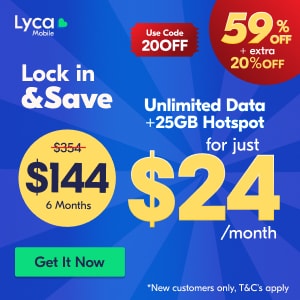
Choosing the right mobile plan can help families stay connected while spending less.
Photo Credit: Lyca Mobiles
The changing economics of mobile plans have created opportunities for providers that focus on flexibility rather than long-term commitments, and Lyca Mobile is one example.
Known for its prepaid-first approach, Lyca Mobile offers plans that combine data, talk, text and international calling features within straightforward monthly packages. For customers looking to maintain predictable mobile expenses while staying connected domestically and internationally, that model can be appealing.
Instead of committing to a traditional contract structure, users can choose a prepaid option that aligns with their current needs and adjust as those needs evolve.
Postpaid plans still have their place, particularly for families and users seeking bundled convenience. But for many consumers, the assumption that postpaid is automatically the superior option no longer holds true.
The smartest mobile plan is not the one with the biggest marketing campaign or the longest list of features. It is the one that delivers the services you actually use at a price that makes sense.
To explore prepaid plans designed around data, talk, text and international connectivity, visit Lyca Mobile and compare the options available today.
Frequently Asked Questions (FAQs)
1. What is the main difference between prepaid and postpaid mobile plans?
Prepaid plans require payment before using services, while postpaid plans allow users to consume services first and pay through a monthly bill.
2. Are prepaid plans cheaper than postpaid plans?
Prepaid plans are often more affordable and offer better spending control, but the overall value depends on individual usage patterns and included benefits.
3. Which is better for managing monthly expenses: prepaid or postpaid?
Prepaid plans generally make budgeting easier because users know exactly how much they will spend before the billing cycle begins.
4. Do prepaid plans offer international calling benefits?
Many prepaid providers now include international calling features or dedicated international plans, making them suitable for users who frequently call overseas.
5. How do I decide whether a prepaid or postpaid plan is right for me?
Consider factors such as monthly budget, data usage, need for family plans, international calling requirements, and preference for flexibility versus convenience.
Disclaimer: This article may include references to or features of products and services made available through affiliate marketing campaigns. NDTV Convergence Limited (“NDTV”) strives to maintain editorial independence while participating in such campaigns. NDTV does not assume responsibility for the performance or claims of any featured products or services.
