
If you are a workaholic like most of us, your social media feed is probably abuzz with productivity hacks, AI tools, and tips to improve workplace efficiency. However, one factor that continues to influence everyday workplace performance more than most people realise is energy.
Modern work demands sustained concentration. Whether it's reviewing financial data, responding to clients, analysing reports, coding software, or managing projects, almost every job requires employees to process information, make decisions, and remain mentally switched on for most of the day. The challenge is that while work has evolved for continuous output, human biology has not.
This mismatch is often most noticeable around mid-afternoon. The to-do list that seemed manageable in the morning suddenly looks impossible to finish. With half the day gone, tasks still lined up, and attention wandering, even minor distractions become harder to resist. The inbox starts looking more inviting than the project that actually needs to get done.

Energy management is becoming just as important as time management in today's workplaces.
Photo Credit: Pexels
What's often dismissed as laziness or a lack of motivation has been recognised by researchers as a genuine physiological phenomenon. A study titled The Post-Lunch Dip in Performance by the University of Pittsburgh Medical Center* found that mid-afternoon declines in alertness can occur regardless of whether someone has eaten lunch, suggesting that the slump has biological origins rather than being caused solely by food consumption.
In a work culture obsessed with doing more, understanding why energy dips may be just as important as finding ways to work harder.
The Workplace Runs On Focus, Not Time
Productivity is frequently discussed as a question of time management. Yet many workplace challenges are actually attention problems.
A marketing proposal can be delayed because the writer struggles to focus. A financial model can contain errors because concentration drops during review. A student can spend hours at a desk while retaining very little information.
The issue isn't always effort. Often, it's cognitive fatigue.
Research on circadian rhythms has long observed that alertness naturally fluctuates throughout the day. The body's internal clock regulates periods of wakefulness and sleepiness over a roughly 24-hour cycle, influencing attention, reaction times, and overall performance. The result is a period during the afternoon when many people experience a temporary reduction in mental sharpness.
Practical Ways To Reset Your Energy And Get Back Into Focus
1. Stop Fighting The Dip And Work With It
One reason the afternoon feels frustrating is that people expect themselves to operate at the same intensity they had at 10 AM. That's rarely realistic. Rather than forcing deep work during a low-energy period, many productivity experts recommend matching tasks to energy levels.
This can be a good time to tackle emails, expense reports, documentation, scheduling, routine calls, or other administrative work. Saving high-concentration tasks for the hours when you naturally feel most alert can often produce better results than simply trying to push harder.
2. Move Before You Reach For More Coffee
When concentration starts slipping, the instinct is often to grab another coffee. Yet a short walk, stretching session, or a few minutes away from the desk can deliver the mental reset many people actually need.
Physical movement increases blood circulation and helps break the mental stagnation that often develops after hours of sitting. Even a quick walk around the office floor or a brief staircase climb can help interrupt the sluggish feeling that tends to build during the afternoon.
3. Check Your Water Bottle Before Your Inbox
Dehydration is one of the most overlooked causes of fatigue and reduced concentration. Since many professionals spend hours in air-conditioned offices, they may not realise they are drinking far less water than usual.
When attention begins to drift, a simple hydration check can be surprisingly effective. Consistently drinking water throughout the day may help support alertness and cognitive performance, particularly during long work sessions.
4. Rethink What Happens At Lunch
Lunch doesn't need to be large to be satisfying. Meals heavily loaded with refined carbohydrates can leave some people feeling sluggish soon afterwards. Many nutrition experts recommend building meals around protein, fibre, vegetables, and healthy fats to help maintain steadier energy levels through the afternoon.
The goal isn't to eat less. It's to avoid the dramatic energy swings that make the 3 PM crash feel even worse.
5. Reduce Decision Fatigue
By afternoon, many professionals have already made dozens of decisions. Responding to messages, attending meetings, prioritising tasks, approving requests, and solving problems all require mental effort.
Creating simple systems can conserve mental energy. Time-blocking calendars, prioritising tasks the night before, and limiting unnecessary notifications can reduce cognitive overload and make it easier to stay focused later in the day.
6. Explore Functional Energy Formats When Needed
Not every energy dip requires another large coffee.
In recent years, the market for energy and focus products has expanded well beyond traditional caffeinated beverages. Consumers today can choose from a range of functional energy formats, including energy drinks, energy shots, powdered drink mixes, focus supplements, caffeinated gummies, caffeinated mints, and caffeinated chewing gums. These products are designed to provide a more convenient way to consume caffeine, especially for people who may not always have access to freshly brewed coffee or tea.
Among these emerging formats, caffeinated gums and mints have gained attention because of their portability. They can be carried in a pocket, kept at a desk, or used during commutes, meetings, study sessions, or travel without requiring preparation. Unlike a large beverage that takes time to consume, gums and mints are designed for people looking for a quick and convenient option when their energy starts to dip.
As awareness of workplace productivity, focus, and mental performance continues to grow, functional formats such as caffeinated gums and mints are becoming a category that more consumers are beginning to explore alongside traditional coffee and tea.
Neuro Is Reimagining How People Recharge During Busy Workdays
As interest in functional formats grows, brands are finding new ways to package caffeine and focus-supporting ingredients for busy professionals. Among the better-known names in this emerging category is Neuro, a brand that has built its portfolio around functional gums and mints designed for modern lifestyles.
Its Neuro Energy & Focus Gum combines 40 mg natural caffeine with L-theanine, an amino acid commonly associated with promoting a calm and focused mental state. While natural caffeine is widely recognised for supporting alertness, pairing it with L-theanine has attracted interest among consumers looking for a more balanced focus experience during work, study sessions, long commutes, or travel. According to an independent MIT study, users who consume the Neuro Mint are able to reach high levels of focus and have 21% higher attention.
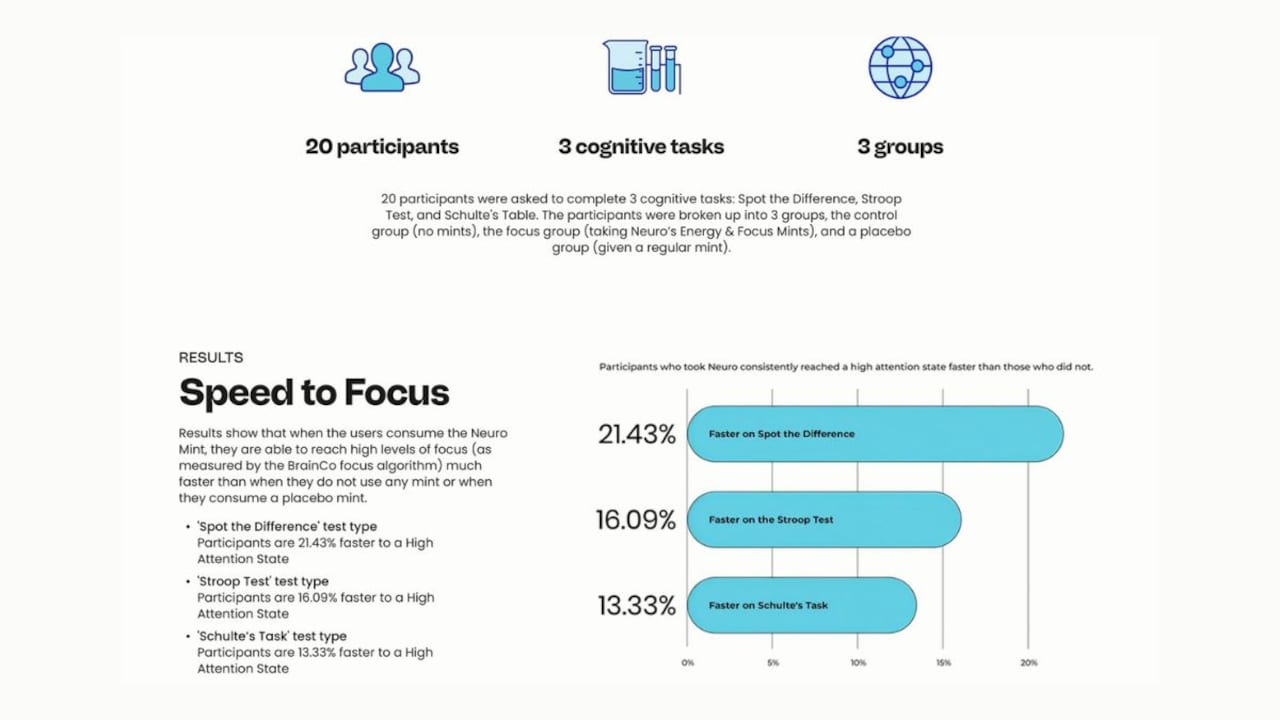
According to an independent MIT study, users who consume the Neuro Mint are able to reach high levels of focus and have 21% higher attention.
Photo Credit: Neuro
Part of the appeal lies in convenience. Unlike traditional caffeinated beverages, natural caffeinated gum doesn't require preparation, cooling time, or carrying a cup around throughout the day. For professionals moving between meetings, students preparing for examinations, or hybrid workers switching between home and office, the format offers a portable alternative that easily fits into a pocket, backpack, or desk drawer.
The category is also becoming easier to access. Consumers interested in exploring 40 mg natural caffeinated gums can find Neuro products on Amazon. During the ongoing Amazon Great Indian Festival Sale, shoppers can often find limited-period discounts and promotional offers on select Neuro gums and mints, making it easier to try functional energy formats without spending significantly.
The afternoon slump may never fully disappear. It's part of human biology. But understanding why it happens and developing practical ways to respond can make the difference between simply finishing the workday and finishing it well.
Top Products To Shop On Amazon Great Indian Festival
1. Neuro Energy & Focus Gum - Peppermint
Designed for busy workdays, study sessions, and long meetings, Neuro Energy & Focus Gum - Peppermint combines 40 mg natural caffeine with 60 mg of L-Theanine, Vitamin B6, and Vitamin B12 to help support alertness and focus. The refreshing peppermint flavour offers a convenient alternative to traditional caffeinated beverages, while the sugar-free, aspartame-free formula makes it easy to enjoy on the go.
2. Neuro Energy & Focus Mints - Peppermint
Neuro Energy & Focus Mints - Peppermint delivers 40mg natural caffeine, 60 mg of L-Theanine, and essential B vitamins in a portable mint format. Created for professionals, students, and anyone looking for a quick focus-friendly pick-me-up, these peppermint mints provide a refreshing taste while fitting seamlessly into your daily routine. They contain no added sugar and are aspartame-free.
3. Neuro Energy & Focus Gum - Iced Coffee
For coffee lovers seeking a convenient energy boost, Neuro Energy & Focus Gum - Iced Coffee combines an iced coffee flavour with 40 mg natural caffeine, 60 mg of L-Theanine, Vitamin B6, and Vitamin B12. The sugar-free, aspartame-free gum is designed to support focus and alertness, making it a practical option for work, travel, study sessions, or whenever you need a little extra mental momentum.
Note: This content, including advice, provides generic information only. It is in no way a substitute for a qualified medical, nutritional or wellness opinion. Always consult a specialist or your own doctor for more information. NDTV does not claim responsibility for this information.
Frequently Asked Questions (FAQs)
1. What causes the 3 PM slump?
The 3 PM slump is often caused by natural circadian rhythm changes, mental fatigue, inadequate sleep, dehydration, and the body's tendency to experience a dip in alertness during the afternoon.
2. How can I stay focused during the afternoon at work?
Taking short movement breaks, staying hydrated, eating balanced meals, getting natural light exposure, and managing caffeine intake can help improve afternoon focus.
3. Can caffeinated gum help improve focus during the afternoon slump?
Caffeinated gum is one of several products people use to support alertness during the afternoon when energy and concentration may begin to dip. For example, Neuro Gum contains 40 mg of natural caffeine, L-theanine and B vitamins, and is often used as a convenient alternative to coffee by those looking for an on-the-go option for focus and alertness.
4. What foods help prevent an energy crash after lunch?
Meals rich in protein, fibre, and healthy fats can support steady energy levels and reduce the likelihood of experiencing a post-lunch energy crash.
5. Are there alternatives to coffee for improving focus?
Yes. Many people explore alternatives such as green tea, movement breaks, hydration strategies, mindfulness exercises, and newer functional formats such as caffeinated gum.
*Source: The post-lunch dip in performance
Disclaimer: This article may include references to or features of products and services made available through affiliate marketing campaigns. NDTV Convergence Limited (“NDTV”) strives to maintain editorial independence while participating in such campaigns. NDTV does not assume responsibility for the performance or claims of any featured products or services.
